
The future economy is changing how schools approach student preparation. Roles that exist today will shift, and entirely new positions will emerge across every sector. High schools in Ontario and across Canada are adjusting their academic programs to address these shifts. Students who develop the right skills early are better positioned for both university and long-term career success.
Key Takeaways
What Future Economy Skills Mean for High School Students
Future economy skills are the practical and academic abilities students need for careers that will require adaptability, communication, and digital confidence. High schools build these through coursework, assessments, and applied learning across all subjects.
According to the World Economic Forum’s Future of Jobs Report, over 44 percent of workers’ core skills are expected to change within the next five years. The five skills in the gear image reflect what Ontario secondary schools are increasingly integrating into course outcomes. Each section below examines one in detail.
Communication
Students practice structured responses, essays, and presentations throughout high school. Teachers assign tasks that require ideas to be organized clearly before they are expressed. This habit applies directly to university coursework and most workplace roles.
Teamwork
Students complete shared projects with assigned roles and individual accountability. Teachers assess not just the final product but how students coordinated throughout the process. Students who develop teamwork habits early adjust more quickly to collaborative environments later.
Digital Skills
Students use platforms, research tools, and productivity applications as part of daily academic work. Teachers reinforce habits around source evaluation and digital organization. Students who graduate with strong digital competency face fewer barriers to entering post-secondary programs or employment.
Problem Solving
Students encounter multi-step assignments that require analysis before execution. Teachers guide students through each stage of reasoning rather than providing direct answers. This builds independent thinking that applies well beyond the classroom.
Critical Thinking
Students compare viewpoints in research tasks and justify conclusions with evidence. Teachers present scenarios that do not have a single correct answer. This trains students to evaluate information carefully rather than accept it at face value.
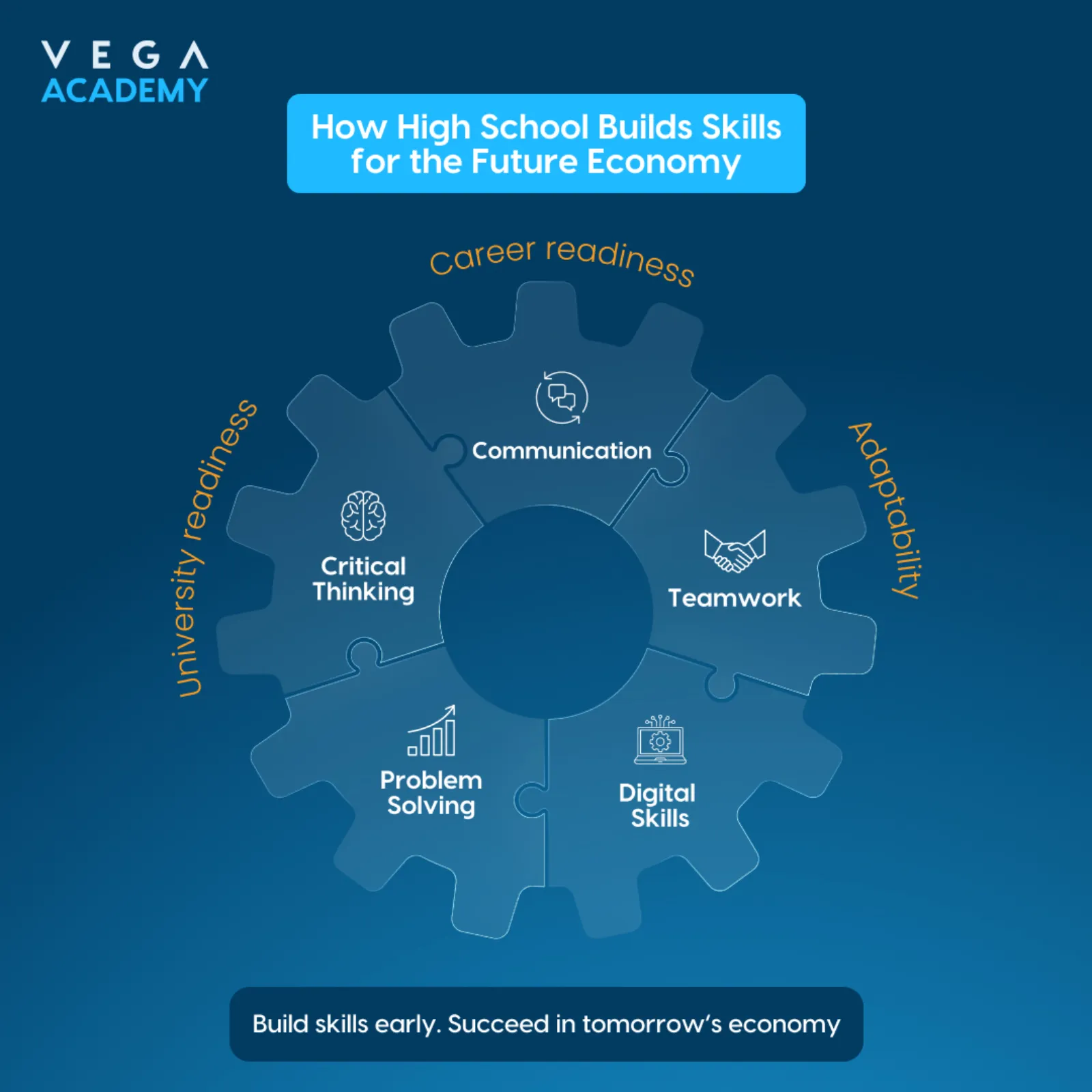
The five interlocking gears represent the core future economy skills: Communication, Teamwork, Digital Skills, Problem Solving, and Critical Thinking. The outer labels, Career Readiness, Adaptability, and University Readiness, show where these skills lead.
Why Class Projects Help Students Build Problem-Solving Skills
Class projects build problem-solving skills by placing students in situations that require applied thinking. Students must plan, research, and complete defined outcomes within set timelines. Teachers structure these projects to include multiple decision points.
Students Work Through Real Constraints
Plans shift when new information arrives or a team member encounters difficulty. Students adapt their approach and document the reasoning behind each change. This process reflects what problem-solving looks like in most professional settings.
Projects Connect Multiple Subjects
A student researching a science topic draws on math for data analysis and English skills for the written report. This cross-subject application is deliberate. Problems in the future economy rarely belong to just one discipline, and projects mirror that reality.
Post-Project Reflection Reinforces Learning
Students review what went well and where the approach broke down. Teachers guide structured debriefs that connect the project to broader learning objectives. Students leave with a clearer picture of their own strengths and gaps.
A Statistics Canada analysis on labour market skill demands confirms that analytical and problem-solving skills rank among the most requested competencies by Canadian employers. This aligns with why schools weight project-based work heavily in academic assessments.
How Teamwork in School Prepares Students for Collaboration
Teamwork in school prepares students for the group-based nature of most professional roles. Students learn to divide responsibilities, communicate progress, and hold each other accountable. These skills require structured practice through repeated group assignments.
Working Across Different Styles
Some students plan ahead while others prefer iterating through a task. Learning to coordinate across these differences is a practical skill. It applies directly to team dynamics in university courses and professional environments.
Handling Conflict Constructively
When group members disagree on direction, students must discuss the issue rather than avoid it. Teachers guide these conversations using structured frameworks. This prepares students for disagreements that are unavoidable in any collaborative environment.
Using Digital Collaboration Tools
Students coordinate through shared documents and communication platforms the same way professionals do. They learn to leave clear written updates, track edits, and maintain shared records. These habits are directly applicable to the future of Canada’s economy, where digital collaboration is standard across sectors.
Build Skills Through Projects
Using Technology in School to Strengthen Digital Skills
Technology in school builds the digital skills students rely on throughout academic and professional life. It is a core part of how modern high schools operate, not a supplementary activity.
Foundational Digital Habits
Students learn to organize academic work in digital systems from early grade levels. File management, platform navigation, and source evaluation become routine. These habits reduce errors and improve work quality as academic demands increase.
Research Accuracy and Source Evaluation
Students access verified academic databases rather than relying on general search engines. Teachers guide them through evaluating information quality and identifying unreliable sources. This is a practical information literacy skill that applies across every subject.
Preparation for the Canadian Workforce
An OECD Education at a Glance report confirms that digital competency is now listed as a core skill requirement across OECD member countries, including Canada. Schools that build digital tasks into academic subjects graduate students with applied experience, not just awareness of the tools.
Communication Skills Students Develop Through Presentations
Presentations build communication skills that written assignments alone cannot develop. Students organize content, select supporting materials, and deliver ideas to an audience. Teachers guide the full process, from outline through delivery to feedback integration.
What Students Practice During Presentations
- Outline structure: Students organize their argument before a single slide is created.
- Speaker notes: Written notes reinforce brevity and support confident delivery.
- Visual aids: Students choose supporting media that clarify, not decorate, the content.
- Live delivery: Students present to peers and respond to questions in real time.
- Feedback integration: Teachers provide specific commentary that students apply to the next task.
How Confidence Builds Over Time
Students start with short prepared responses and progress to longer formal presentations. Teachers create structured feedback sessions after each delivery. Students who receive specific, detailed feedback improve more quickly than those who receive only general comments.
Why This Matters at University
Seminar presentations, group reports, and thesis defenses are standard university formats. Students who have practiced these skills in high school walk into those settings with a clear advantage. The preparation is not theoretical; it is directly transferable.
Critical Thinking Skills Built Through Academic Challenges
Academic challenges build critical thinking by requiring students to work through ambiguity. Not every assignment has a single correct answer. Students must weigh evidence, consider alternatives, and defend a reasoned position.
Research Assignments
Students compare sources with different perspectives on the same topic. They assess credibility, check for bias, and determine which sources support their argument most effectively. Teachers review the reasoning process, not just the conclusion reached.
Case-Based Tasks
Students receive a scenario with incomplete information and must identify what data they need before reaching a conclusion. This mirrors how professionals assess situations in the economy in the future: with limited information and time pressure.
Cross-Subject Application
A student who analyzes a historical event using evidence also brings that framework to a science lab or a business case study. Exposure to multiple disciplines strengthens how students apply reasoning. The strongest critical thinkers are those who have encountered structured challenges across many subjects.
Why These Skills Matter for University Preparation
University demands a level of independence that most students underestimate before arriving. Professors expect students to manage their own schedules, engage with complex reading, and contribute to discussions without daily direction.
Skills Universities Expect on Day One
- Research skills: Students must locate, evaluate, and cite sources without guidance.
- Written argument: First-year essays require structured reasoning, not a summary.
- Time management: Students balance multiple deadlines with no daily reminders.
- Self-directed study: Reading and preparation happen outside class with no supervision.
- Presentation confidence: Seminars and group work require students to speak and defend ideas.
Why the Gap Is Smaller for Prepared Students
Students who practice these habits in high school arrive with a functional system already in place. Those who have not often spend their first year adjusting rather than progressing. The difference is not academic ability; it is preparation.
The future of Canada’s economy increasingly values graduates who combine academic expertise with applied skills. Students who develop these competencies in high school, like those in Vega Academy’s structured day school program, are better positioned for both university admission and long-term success.
How Schools Help Students Prepare for the Future Economy
Schools prepare students for the future economy by building skill development into the academic structure, not just extracurricular activities. Every assignment, project, and assessment contributes to a broader set of competencies.
Structured Feedback Systems
Students who receive specific, structured feedback on their work identify patterns in their own performance. They know what to adjust and why. Teachers who prioritize feedback quality over quantity produce stronger student outcomes.
Career Awareness Within the Curriculum
Students learn about industry trends, professional expectations, and post-secondary pathways as part of school programming. This awareness gives purpose to academic effort. Students who understand why they are developing a skill engage with it more seriously.
What Strong Schools Produce
Schools that combine academic rigor with applied skill development produce graduates who navigate the future economy with confidence. A student who writes well, thinks carefully, communicates clearly, and collaborates effectively has what both universities and employers consistently require.
Frequently Asked Questions
What does the future economy mean for high school students?
The future economy refers to the changing structure of work, where industries shift and new roles emerge faster than previous generations experienced. Students entering the workforce over the next decade will need communication, analytical, and digital skills alongside their academic qualifications. High schools are adjusting programs to account for these shifts directly.
How do high schools prepare students for future economic demands?
High schools address future economy preparation through a combination of academic coursework, project-based assignments, and structured skill development across subjects. Students build communication, teamwork, problem-solving, and digital skills through repeated practice in daily lessons. Schools also introduce career awareness programs that connect academic learning to industry expectations..
Why are digital skills important for the future of the Canadian economy?
Digital skills support employability across nearly every sector of the Canadian economy, from healthcare and finance to education and skilled trades. As industries adopt more technology in their operations, workers who navigate digital tools confidently are more productive and adaptable. Students who build these skills during high school reduce the transition gap when entering university or the workforce.
Building Skills for Tomorrow at Vega Academy
Future economic readiness starts with consistent skill development across every grade level of high school. Vega Academy builds communication, critical thinking, teamwork, and digital competency into its academic programs so students graduate prepared for both university and career pathways. Families and students can visit the Day School Program page or request more information from the Vega Academy admissions team.