
A growing number of Ontario high school students are using dual credit programs to bridge the gap between secondary school and university long before graduation actually arrives. The appeal is straightforward on the surface: a student earns credit toward both their high school diploma and a future university degree from the same course. What’s less obvious, and arguably more valuable, is what that experience does for a student’s confidence and preparedness once they actually start university full-time.
Students who’ve already sat in a university-style classroom, managed a syllabus with less hand-holding than a typical high school course, and met the expectations of post-secondary grading know what’s coming. That familiarity removes a significant amount of the uncertainty that makes first-year university disorienting for so many new students.
What Dual Credit Programs Mean
A dual credit program allows a high school student to take a course that counts simultaneously toward their Ontario Secondary School Diploma and toward credit at a partnering university or college. The course itself is typically delivered at, or in partnership with, the post-secondary institution, which means the content, pacing, and academic expectations reflect actual university standards rather than a simplified high school version of similar material.
This distinguishes dual credit from Advanced Placement or other enriched high school courses. A dual credit course isn’t an advanced version of a high school class. It is, in most cases, the same course a first-year university student would take, delivered to a high school student who has demonstrated readiness for that level of work.
How Students Earn University Credits Earlier
The mechanics are relatively simple once a student is enrolled in a qualifying program. The student completes the course according to the university’s academic standards and grading structure, and upon successful completion, that course appears on both their high school transcript and as transferable credit recognized by the partnering institution.
At VEGA Academy, this pathway is supported directly through the school’s affiliation with International Business University. Students aren’t simply told that university-level courses exist somewhere else. They have a structured, supported route into them, along with mentorship from current university students through the IBU North Star and IBU Tutors programs, which gives them academic support specifically from people who have recently navigated the same transition.
Academic Advantages of Dual Credit Learning
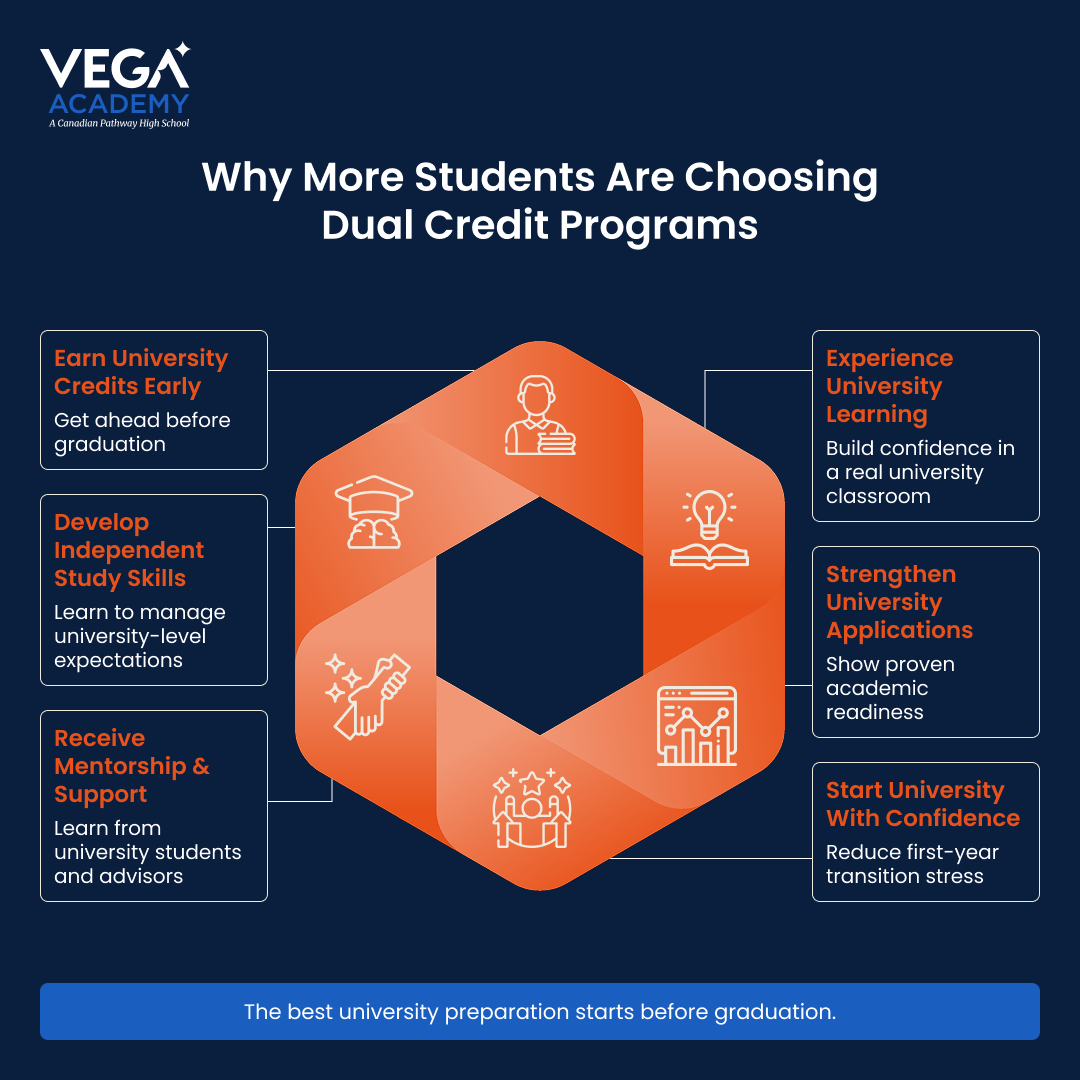
The most immediate advantage is exposure to genuine university-level rigor before the stakes are as high as they will be during an actual degree program. A student who struggles with the independent pacing of a university course during a dual credit term has the chance to adjust their study habits with the support of their high school environment still in place, rather than discovering that gap for the first time during their actual first semester of university.
Building Independent Study Skills
University courses generally expect far more self-directed work than high school courses, with less frequent check-ins and a greater reliance on the student to manage their own progress. Dual credit courses give students a proper opportunity to build that independence gradually, with the safety net of their regular high school support system still available if they need it.
Strengthening University Applications
A transcript that includes successfully completed university-level coursework sends a clear signal to admissions committees: this student has already demonstrated they can handle the academic demands of post-secondary study, not just in theory, but with a verified result. That kind of evidence carries real weight, particularly for competitive programs where most applicants present similarly strong high school grades.
Build Strong Thinking Skills
Help students succeed through guided academic skill development
Who Benefits Most From Dual Credit Opportunities
Dual credit programs tend to suit students who have demonstrated solid academic performance in their regular coursework and who are looking for a more substantial challenge than their current courses provide. They’re particularly well suited to students who already have a reasonably clear sense of what they want to study at university, since the credit earned will be most valuable when it aligns with the student’s intended degree path.
- Students who are academically strong but feel under-challenged by standard coursework
- Students with a clear sense of their intended field of study who want a head start in that specific area
- Students preparing for competitive university programs where demonstrated readiness matters during admissions review
- Students who want a lower-stakes opportunity to test their readiness for university-level pacing and independence before committing fully
Students who are still exploring their academic interests broadly may benefit more from a strong foundational program first, since dual credit is most valuable when paired with a reasonably defined sense of direction.
Questions Families Should Ask About Dual Credit Programs
Families considering dual credit options for a student benefit from asking specific questions before enrolling, rather than assuming all dual credit pathways function the same way.
- Which university or college is the partnering institution, and how widely is that institution’s credit recognized elsewhere?
- Does the school provide academic support specifically for the dual credit course, given its higher level of difficulty?
- How does the course fit into the student’s overall course load, and will it create scheduling pressure with their other diploma requirements?
- What kind of mentorship or guidance is available if the student struggles with the pacing or independence the course requires?
- How does the credit transfer if the student ultimately attends a different university than the partnering institution?
At VEGA Academy, families can raise these questions directly with the admissions team, who can walk through how the school’s affiliation with International Business University supports students through the dual credit pathway, including the mentorship structure available through IBU North Star guides and IBU Tutors.
Key Takeaways

Dual credit courses count simultaneously toward a high school diploma and university credit, delivered at genuine university academic standards.
Students build independent study skills and university-level academic habits earlier, which reduces the adjustment shock of first-year university.
A transcript showing completed university-level coursework strengthens university applications by demonstrating verified readiness, not just potential.
Dual credit suits academically strong students with a reasonably clear sense of their intended field of study more than students still exploring broadly.
Families should ask specific questions about institutional partnership, academic support, and credit transferability before enrolling a student.
Frequently Asked Questions
Do dual credit courses count toward both the OSSD and a future university degree?
Yes, that dual recognition is the defining feature of a dual credit course. The course satisfies a requirement toward the Ontario Secondary School Diploma while also being recognized as transferable credit by the partnering post-secondary institution. The specific way that credit transfers if a student ultimately attends a different university than the partnering institution can vary, so families should confirm transferability details directly with both the high school and the relevant university’s admissions or registrar’s office before assuming a credit will apply identically everywhere.
Is dual credit more difficult than a regular high school course?
Generally yes, since dual credit courses are held to the academic standard of the partnering university rather than a high school standard, even though a high school student is enrolled in them. This typically means a heavier reliance on independent study, less frequent check-ins from the instructor, and grading that reflects university-level expectations rather than high school grading norms. Students considering a dual credit course should have demonstrated strong performance and reliable independent work habits in their regular coursework first, since the jump in rigor and independence is real and benefits from a solid academic foundation going in.
Can a student take more than one dual credit course during high school?
Many students do take more than one dual credit course over the course of their high school years, particularly once they’ve successfully completed an initial course and have a clearer sense of how to manage the increased independence and workload. The right number depends heavily on the individual student’s course load, their other academic and extracurricular commitments, and how well the first dual credit experience went. Schools with thorough academic advising, including individualized planning support, are generally better positioned to help a student determine an appropriate pace rather than overloading their schedule.
Do dual credit programs really give students a head start in university?
Dual credit programs let students complete genuine university‑level coursework while still in high school, so they start their degree with credits already earned and a clear understanding of how university classes actually work. That combination of advanced standing and familiarity with university expectations makes the transition into first year smoother and reduces the adjustment shock that many new students experience.
How do dual credit courses affect university admissions if the credits don’t transfer?
Even when credits do not transfer perfectly, admissions teams still see dual credit as evidence that a student has successfully managed university‑level rigor, not just high school enrichment. That demonstrated readiness can strengthen applications, especially for competitive programs, because it shows the student can handle more independent pacing, higher expectations, and a heavier workload than typical high school courses.reddit+3
What signs suggest a student is ready for a dual credit program?
A student is usually ready for dual credit when they have strong grades in core subjects, reliable study habits, and can manage assignments without constant reminder or supervision. Families should look for a track record of meeting deadlines, handling busy course loads, and showing genuine interest in a defined area of study, because dual credit works best for students who are both academically prepared and motivated to engage with university‑level material.
Getting Started With Dual Credit
Families interested in dual credit opportunities for their student benefit from starting the conversation early, ideally before course selection deadlines for the upcoming academic year. Understanding which courses are available, how they fit into a student’s overall diploma requirements, and what academic support is available makes the difference between a dual credit experience that builds confidence and one that creates unnecessary stress.
Families can connect with VEGA Academy’s admissions team to learn more about how the school’s dual credit pathway works through its affiliation with International Business University, including the mentorship and tutoring support available to students taking on this added academic challenge.